
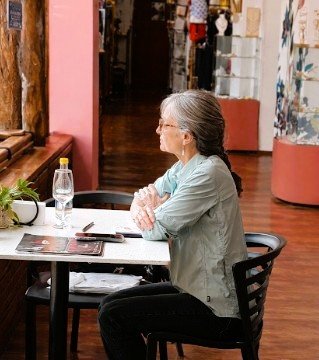
For many expats, the early years of living abroad are defined by constant adjustment. Every routine feels new. Every task requires attention. Even simple things like shopping, getting around, or ordering a meal carry a sense of effort and discovery.

Then, gradually, something changes.

The unfamiliar becomes familiar. The routines that once required thought begin to happen automatically. The city no longer feels like something to figure out.

And at some point—often quietly—living abroad stops feeling like the main story.

It just becomes life.

The shift most people don’t notice

There is no clear moment when this transition happens. No milestone or announcement. It builds slowly through repetition.

The café becomes “your place.”
The walking route becomes automatic.
The market vendor recognizes you.

What once felt foreign becomes expected.

For many expats, especially those living in places like Cuenca, this is the result of years of building a life piece by piece. At first, those routines are tied closely to the idea of being abroad. Over time, they lose that label.

They simply become daily life.

When identity begins to shift

For some, this transition feels like a sense of calm. The need for every day to feel meaningful or different fades. Life becomes steady, predictable, and comfortable.

For others, it raises a quieter question.

If living abroad is no longer the defining experience, then what is?

That question doesn’t always arrive dramatically. It often sits in the background. A person may still enjoy where they live and have no desire to leave. But the meaning of the move itself begins to fade.

Living abroad explains where they are.

It no longer explains who they are becoming.

When life reshapes the experience

Sometimes this shift happens naturally over time. Other times, it is pushed forward by life itself.

Health concerns.
Family responsibilities back home.
Changes in mobility or independence.

These realities can quickly change how distance feels and how daily life is experienced.

For older expats especially, this stage can bring practical considerations into sharper focus, alongside deeper questions about long-term plans and support systems.

The end of novelty—and what follows

In the beginning, novelty creates momentum. There is always something new to notice, learn, or adapt to. That sense of movement can carry people forward, even through challenges.

When that novelty fades, something else takes its place.

Ordinary life.

And ordinary life can feel more exposing. Without the constant backdrop of “being abroad,” people are left more directly with themselves and their routines.

That is often when bigger questions begin to surface.

What is this stage of life for?
What comes next?

A second chapter begins

For many long-term expats, this moment becomes the start of something new.

Some begin volunteering or getting involved in the community.
Others take up creative work, travel differently, or reconnect with interests that had been set aside.

It is rarely dramatic.

But it is meaningful.

The focus shifts from building a life abroad to shaping a life within it.

The place has done its job

It is easy to misread this transition.

When a place no longer feels central, some wonder if something has gone wrong. If the decision to move was overestimated. If the “magic” has faded.

Often, that is not the case.

Sometimes the place has simply done what it was meant to do. It provided structure, stability, and a new foundation. It became normal enough that it no longer needs to carry emotional weight.

That is not failure.

It may be success.

When the background replaces the plot

At a certain point, many expats stop thinking of themselves primarily as people who moved abroad.

They become people living their lives—fully, ordinarily—in the place they chose.

That shift may seem small.

It isn’t.

It marks the moment when living abroad moves into the background, and something more personal begins to take center stage.

And for many, that is where the deeper part of the journey begins.