
Ecuador’s president has opened the door to a possible U.S. troop presence, tying any deployment to strict coordination with Ecuadorian forces as military cooperation between the two countries becomes more visible.

President Daniel Noboa said foreign troops could arrive as early as this year, provided they operate under Ecuadorian command. He framed the idea as a joint effort to confront organized crime and drug trafficking, not a loss of sovereignty.

  • Possible U.S. troop presence tied to Ecuadorian military leadership
  • Proposal follows recent rejection of foreign bases in a national vote
  • Joint naval exercises recently completed in Ecuadorian waters

Noboa described the potential deployment as limited and collaborative, emphasizing that national forces would remain in charge. He argued that improving security conditions create an opportunity to press forward against criminal networks.

The proposal revives a sensitive debate. A 2025 national vote rejected the idea of foreign military bases, but Noboa suggested existing agreements could still allow a temporary presence under Ecuador’s control. He also pointed to public support for maintaining close ties with the United States.

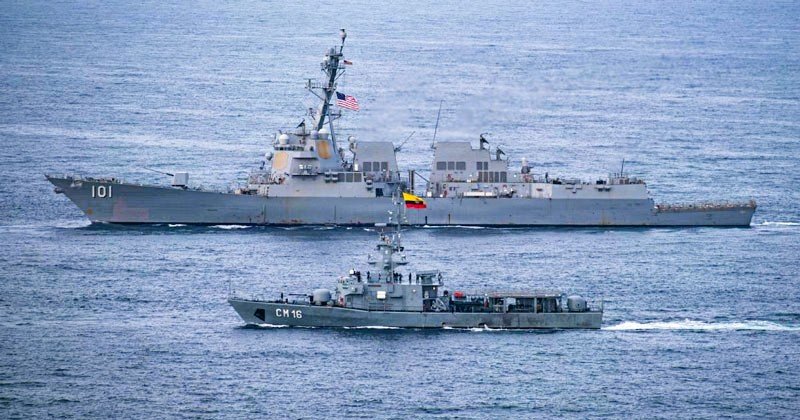
The remarks come alongside a new round of joint military exercises off Ecuador’s coast. Operation Southern Seas 2026, held April 7–8 and concluded April 9, brought together Ecuadorian naval and air units with major U.S. assets, including the aircraft carrier USS Nimitz and the destroyer USS Gridley.

The drills included maritime interdiction scenarios, live-fire exercises, air defense operations, and coordination between personnel from both countries. Ecuador deployed missile corvettes BAE Manabí and BAE Loja, along with A-29 Super Tucano aircraft. U.S. forces contributed fighter jets and helicopters operating from the carrier group.

Ecuadorian officials also boarded the Nimitz during the exercises, observing flight operations and discussing coordination and maritime security with U.S. counterparts.

Beyond the exercises, the cooperation signals a broader shift in strategy. The government is combining domestic security efforts with international partnerships, presenting organized crime as a cross-border threat that requires outside support.

Noboa has indicated that Ecuador’s approach is distinct from other regional models, pointing instead to strategies used in Colombia. His government is drawing on both international military cooperation and regional experience as it shapes its next phase of security policy.

For now, the message is clear: Ecuador is willing to work with foreign partners, but intends to keep control firmly in its own hands.