
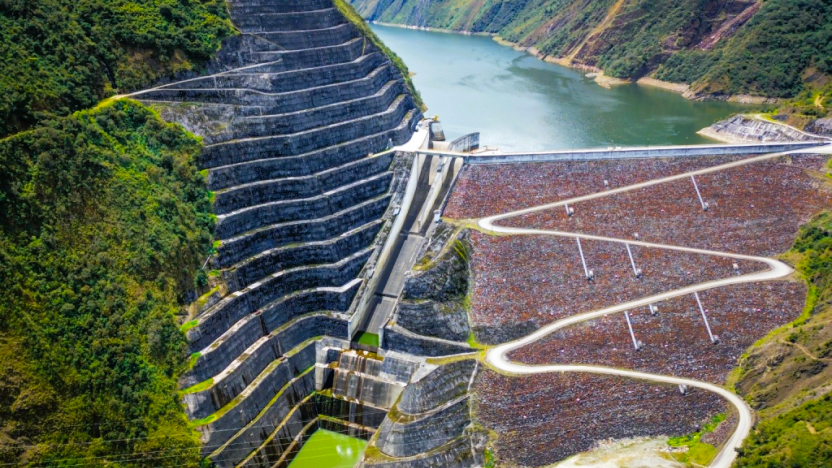
The Mazar reservoir, a key component of Ecuador’s hydroelectric system, continues to see a steady decline in water levels as rising electricity demand puts pressure on the country’s energy supply.
As of April 26, the reservoir stands at 2,132.89 meters above sea level, down from 2,139 meters at the start of the month. That marks a drop of just over six meters in less than four weeks, according to official data.
The decline has accelerated since April 19, driven largely by a heat wave along Ecuador’s coast. Higher temperatures have increased electricity consumption, particularly for cooling, placing additional strain on the system and requiring greater use of hydroelectric resources.
Despite the drop, the reservoir remains above its critical threshold of 2,115 meters above sea level—about 18 meters higher—meaning it is still operating within a functional range. However, continued declines could increase pressure on power generation if conditions persist.
Authorities have downplayed concerns about an immediate energy crisis, stating that recent outages were linked to maintenance work that had not been properly communicated. Those scheduled interruptions have since been suspended.
Even so, energy system operators are warning of broader risks. A recent assessment highlighted the possibility of cascading failures in the electricity grid if demand continues to exceed capacity, potentially leading to larger-scale outages.
Hydroelectric generation remains central to Ecuador’s power supply. The Coca Codo Sinclair plant alone is currently providing more than half of the country’s electricity, while the Paute Molino complex—which includes the Mazar reservoir—accounts for roughly 19%.
Recent improvements in water flow at Coca Codo Sinclair have helped stabilize generation for now. But with demand still elevated and reservoir levels declining, the situation will require close monitoring in the coming weeks.
For residents, the trend raises a familiar concern: even if supply remains stable today, sustained pressure on the system could increase the risk of outages if conditions do not improve.

