
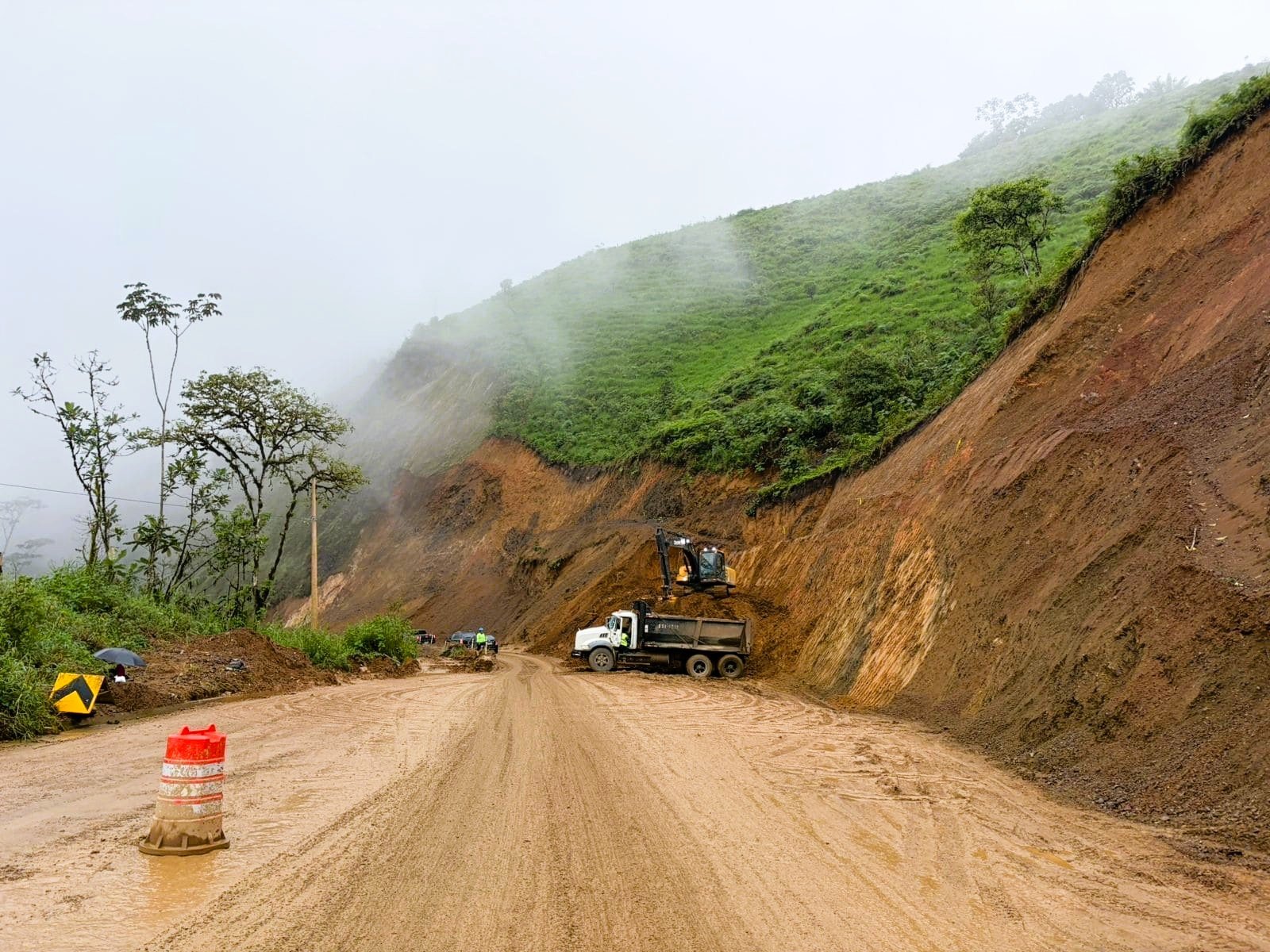
Major repair work is expected to begin in June along the Cuenca-Molleturo-El Empalme highway as authorities move forward with a long-awaited project targeting several critical sections of the roadway.
Following the signing of a construction contract in March between the Ministry of Infrastructure and Transport and RIPCONCIV Construcciones Civiles Cía. Ltda., crews have spent recent months carrying out technical studies, topographic surveys, and subdrain interventions needed before permanent repairs can begin.
Machinery remains active along the highway to respond to emergencies caused by ongoing rains and landslides that continue affecting traffic conditions.
Officials said subdrainage work is currently concentrated near kilometer 15 in the El Molino sector and will gradually expand in both directions toward Cuenca and El Empalme.
At the same time, topographic work is underway near kilometers 57, 90, 92, and 105, areas identified as some of the highway’s most vulnerable points.
Authorities are also preparing to begin crack sealing, pothole repairs, and asphalt resurfacing between kilometers 7 and 30, extending toward the Loma de la Virgen sector. The goal is to improve driving conditions ahead of the May 24 holiday period.
The broader project includes interventions at five major critical points located at kilometers 49, 57, 90, 92, and 105.
Officials said construction crews have already removed roughly 30 cubic meters of landslide debris from blocked sections of the roadway in recent days.
The project carries an investment of approximately $21.5 million financed through a World Bank loan. The international organization is overseeing the progress of the planned improvements.
Residents and frequent highway users say they are hopeful the permanent repairs will finally improve safety and reliability along the corridor, which serves as one of the main transportation links between Cuenca and Guayaquil.
Drivers have also requested better signage and increased security in some areas due to ongoing reports of robberies along portions of the route.
The contract for the project covers an 18-month construction period.
