
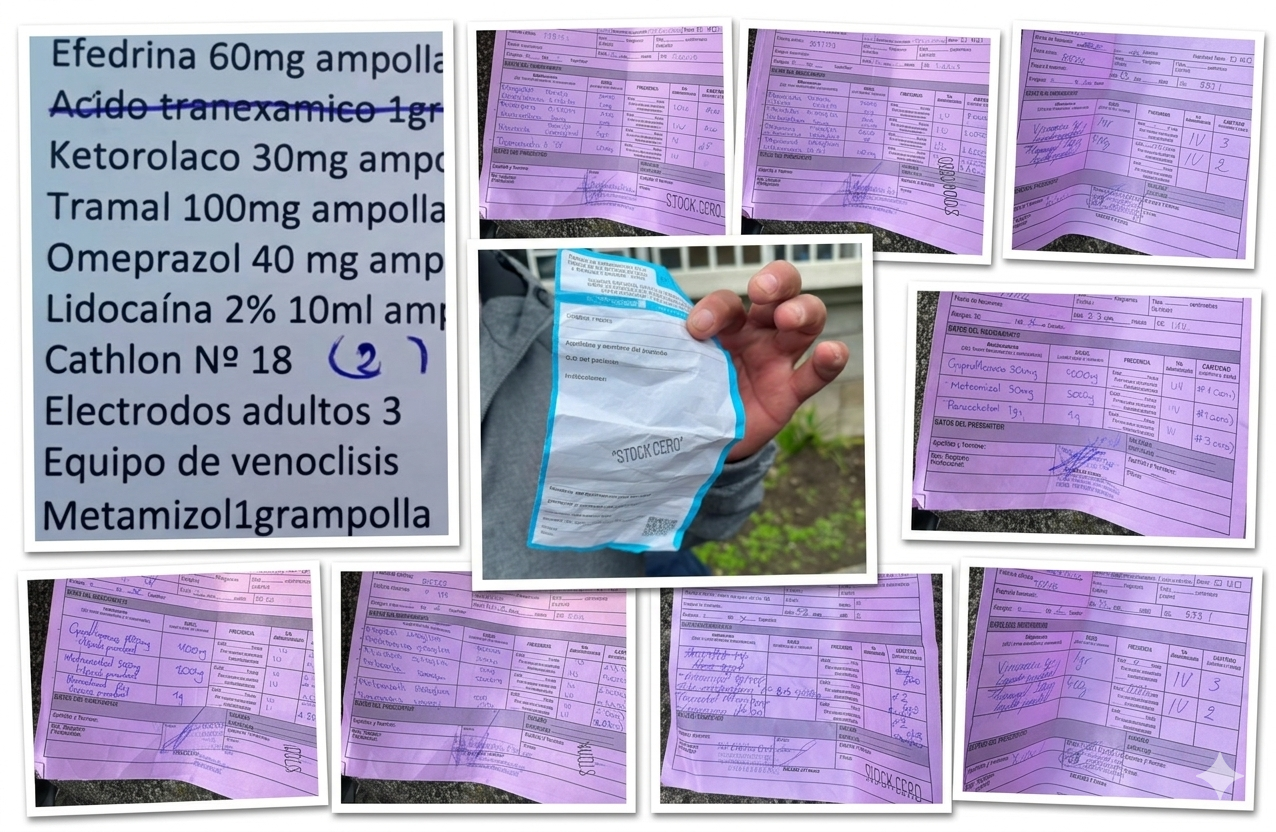
Families with relatives hospitalized in Cuenca’s public healthcare system say they are being forced to spend hundreds or even thousands of dollars on medicines and medical supplies because hospitals lack essential items.
The shortages are affecting the Vicente Corral Moscoso Hospital, José Carrasco Arteaga Hospital, and the Maternal and Child Health Center and Emergency Department operated by the Ecuadorian Social Security Institute.
For many families, the costs have become overwhelming.
One man said he has spent nearly $3,000 on medicines for his wife, who remains hospitalized in intensive care at Vicente Corral Moscoso Hospital after complications from what was expected to be a routine procedure.
Daily prescriptions from outside pharmacies reportedly range between $80 and $150. The requested items included antibiotics, painkillers, anesthetics, sedatives, syringes, saline solution, gloves, and other critical supplies.
Another family said they spent around $600 after a traffic accident victim was admitted to the same hospital. They were instructed to purchase drainage systems, gloves, medications, and monitoring equipment outside the facility.
At José Carrasco Arteaga Hospital, relatives of patients described buying expensive medical kits and specialized supplies on short notice. One woman said she spent nearly $700 while caring for her mother, who suffers from peritoneal cancer.
She also said the hospital’s CT scanner was not functioning, forcing some examinations to be carried out elsewhere.
Other patients reported being asked to buy nephrostomy equipment, anesthetics, sedatives, antibiotics, and examination gloves.
At the Maternal and Child Health Center, some patients said they were prescribed medications unavailable at the hospital pharmacy and told to obtain them privately.
Hospital officials acknowledged supply problems.
Vicente Corral Moscoso Hospital stated that medicine availability currently stands at around 60%, while medical device availability is approximately 68%. Antibiotics, anesthetics, and critical pain medications are among the items with the greatest shortages.
Officials said centralized purchasing procedures have slowed acquisitions, but partial deliveries are expected during May with the goal of stabilizing supplies above 85% by June.
The hospital serves patients from several southern provinces and operates with occupancy levels above 95%, handling roughly 1,000 outpatient visits and 400 emergency cases each day.
Plans are also moving forward to expand the hospital into a larger specialty center, increasing capacity from 290 to 400 beds and strengthening intensive care services.
