
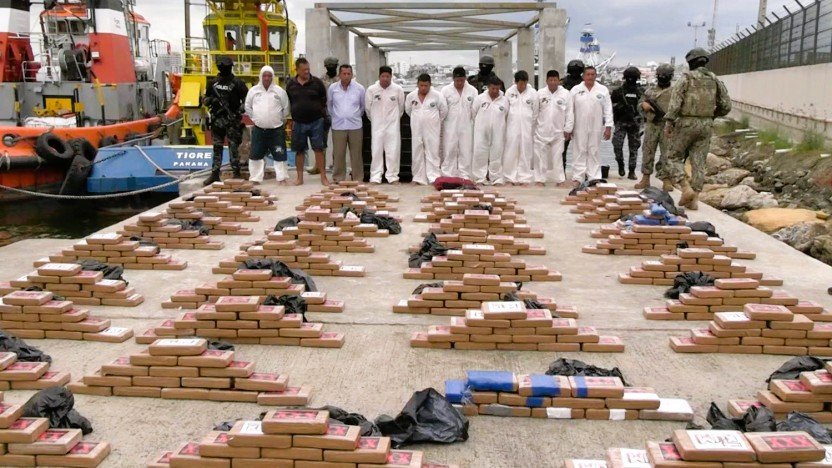
A major anti-narcotics operation off Ecuador’s coast has disrupted a large cocaine shipment headed for Mexico, with authorities arresting 10 suspects and seizing hundreds of drug packages in what officials describe as a coordinated international effort.

The operation, known as “Deep Sea,” was carried out on March 24 after intelligence identified a trafficking network planning to move drugs from the coastal city of Manta to Mexico. Investigators from Ecuador’s National Anti-Drug Unit worked alongside the Ecuadorian Navy and international partners, including U.S. authorities, to track the movement.

After roughly 10 days of surveillance and coordination, authorities intercepted an Ecuadorian-flagged fishing vessel named Aurora approximately 300 miles southwest of Manta. The vessel was accompanied by three smaller fiberglass boats, a setup commonly used by trafficking groups to transfer drugs at sea.

During the boarding, officers discovered 39 sacks containing 588 blocks of cocaine hydrochloride. The shipment is estimated to be worth around $19 million on the international market. Authorities also seized communication equipment, including mobile phones, a GPS device, and a radio.

The crew—10 individuals from the Manabí province, including residents of Manta and Jaramijó—were detained and transported back to port on March 26. Officials later confirmed that at least three of the suspects had prior records related to drug trafficking.

All 10 individuals now face charges for large-scale drug trafficking and have been placed in pretrial detention in Guayas province while investigations continue. Authorities are analyzing seized electronic devices and have taken custody of the vessel as part of the ongoing case.

The operation highlights a persistent trafficking method along Ecuador’s Pacific coast, where fishing boats are used to transport drugs to offshore transfer points, often linking to routes toward Central America and Mexico.

Officials say the financial incentives for those involved are significant. Boat operators can reportedly earn up to $40,000 per trip, with other roles also receiving substantial payments.

The seizure is part of a broader trend of intensified maritime enforcement. Authorities reported that approximately five tons of cocaine have been intercepted along the Manabí coast in March alone, underscoring the region’s strategic role in international drug trafficking routes.

A separate operation on April 1 further reinforced that pattern, with another vessel intercepted closer to shore carrying an estimated 1.8 tons of drugs and leading to two additional arrests.

Authorities say investigations into the broader network behind the shipments are ongoing, as Ecuador continues to confront its role as a key transit point in the global cocaine trade.