
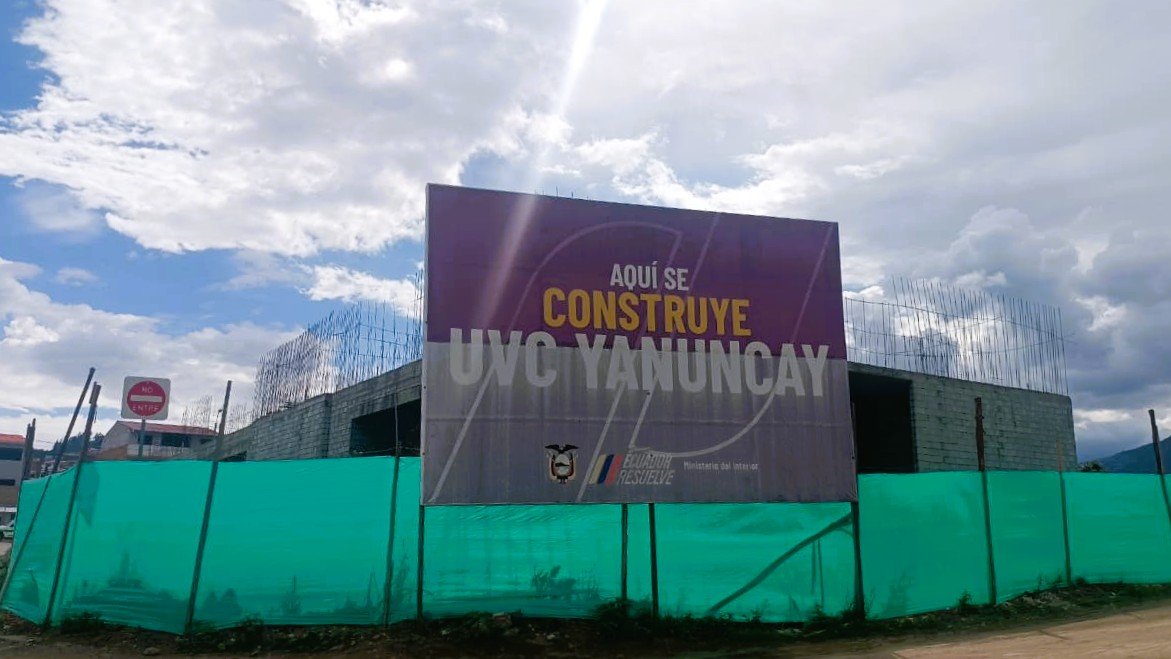
Two major public projects promised to residents of Cuenca — a Community Surveillance Unit (UVC) and a Type C hospital — remain incomplete years after being announced, fueling frustration and concern among local communities.
The most recent case involves the construction of the city’s first UVC in the southern sector. Work began in July 2024 but was halted just months later, in December, due to lack of funding. The contractor had completed only about 30% of the project before construction stopped.
More than a year later, the unfinished structure has become a source of insecurity for residents of the Los Libertadores neighborhood. Locals report that the abandoned building is now being used by individuals for illicit activities, including drinking and hiding from authorities, while robberies in the area have reportedly increased.
Community leaders have called on authorities to explain the delays and push for the project’s completion, warning that the current situation is worsening safety conditions in the neighborhood.
The stalled UVC project is part of a broader national plan to expand police infrastructure, which has also seen slow progress. While the government has highlighted the delivery of patrol vehicles and equipment, no clear timeline has been provided for completing key facilities.
At the same time, a long-promised Type C hospital project in Cuenca has yet to materialize. First announced in 2017, the facility was intended to provide specialized care — particularly for maternal and child health — and was backed by international funding through an agreement between Ecuador and Italy.
Plans included a multi-service medical center offering obstetrics, pediatrics, radiology, emergency care, and rehabilitation services, along with upgrades to regional hospitals and the acquisition of ambulances.
Despite initial funding announcements and site selection, construction has not moved forward, leaving the project in limbo nearly a decade later.
Together, the delays in both the UVC and hospital projects highlight ongoing challenges in executing large-scale public infrastructure plans, while residents continue to wait for improvements in security and healthcare services.
