
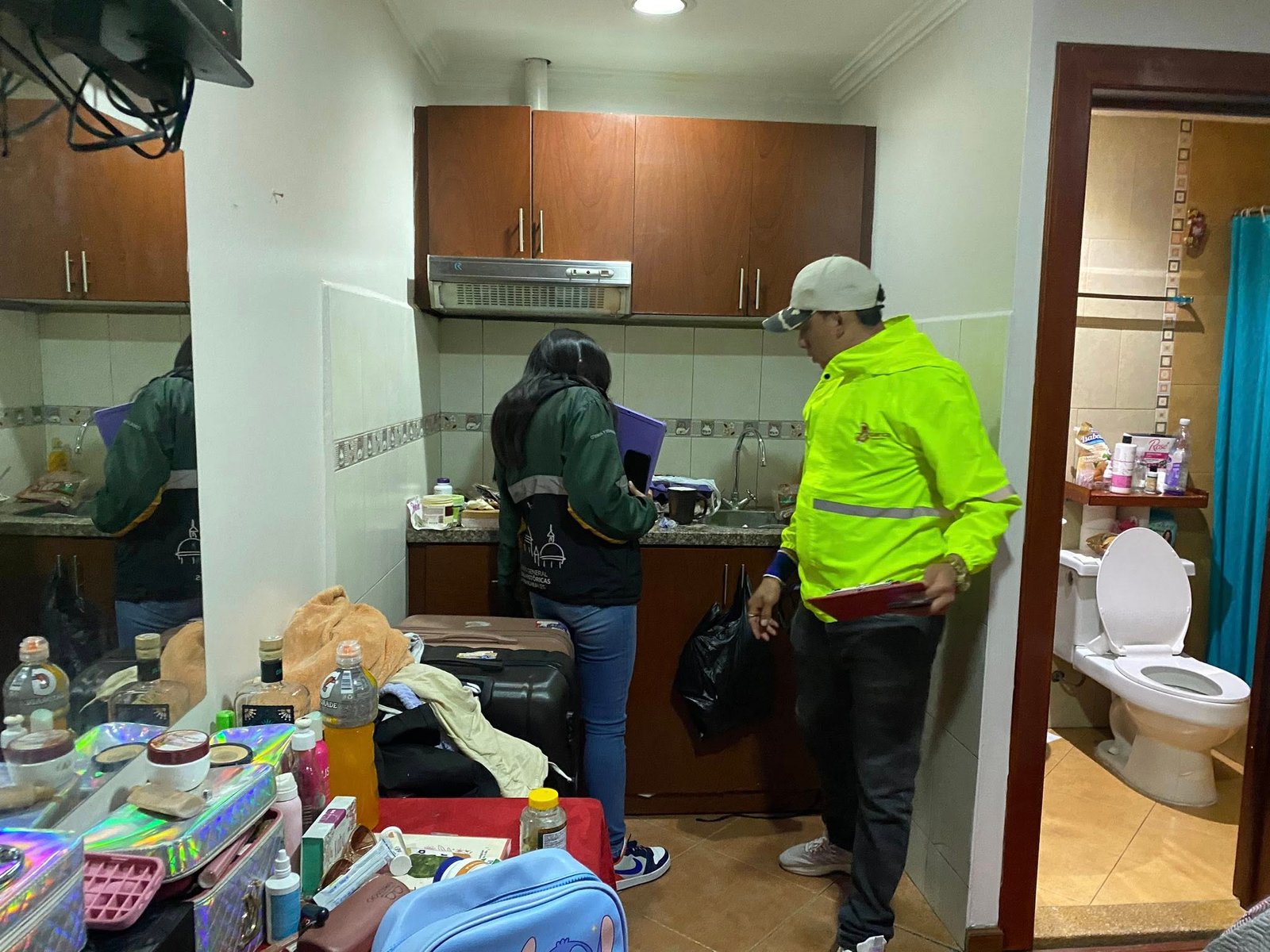
The recent closure of a house operating as a brothel in Cuenca’s Historic Center has drawn renewed attention to a broader issue affecting neighborhoods across the city: the use of residential properties for clandestine sex work operations.
Authorities shut down the property on March 26 in a coordinated operation involving municipal departments, the Citizen Guard, the Citizen Security Council, and the National Police. Officials say the case is far from isolated.
According to municipal representatives, similar operations are known to exist in multiple areas of the city, often disguised as ordinary homes or apartments. These properties are frequently advertised online, making them accessible while remaining largely hidden from public view.
Despite growing complaints from residents, enforcement remains limited. Officials acknowledge that current regulations only allow authorities to act when there is sufficient evidence to justify closure, a process that can take months to complete.
The absence of a specific municipal ordinance has made the situation more difficult to control. At present, Cuenca lacks clear rules to regulate land use in these cases or to impose financial penalties on property owners who allow their properties to be used for illegal activities.
Local officials say that gap is one of the main obstacles to more effective enforcement.
A proposal aimed at addressing the issue is now under review. The initiative, introduced by a city council member, would require the registration of rental contracts, allowing authorities to better track who occupies residential properties.
Supporters argue that such a measure could help prevent properties from being rented without oversight, a practice they say has contributed to the spread of illicit activities, including clandestine brothels.
The proposal was previously returned for revisions but is expected to be resubmitted for debate in the coming weeks.
For now, authorities say they will continue to act on a case-by-case basis, while residents and officials alike push for stronger legal tools to address what they describe as a growing concern in Cuenca’s neighborhoods.
